

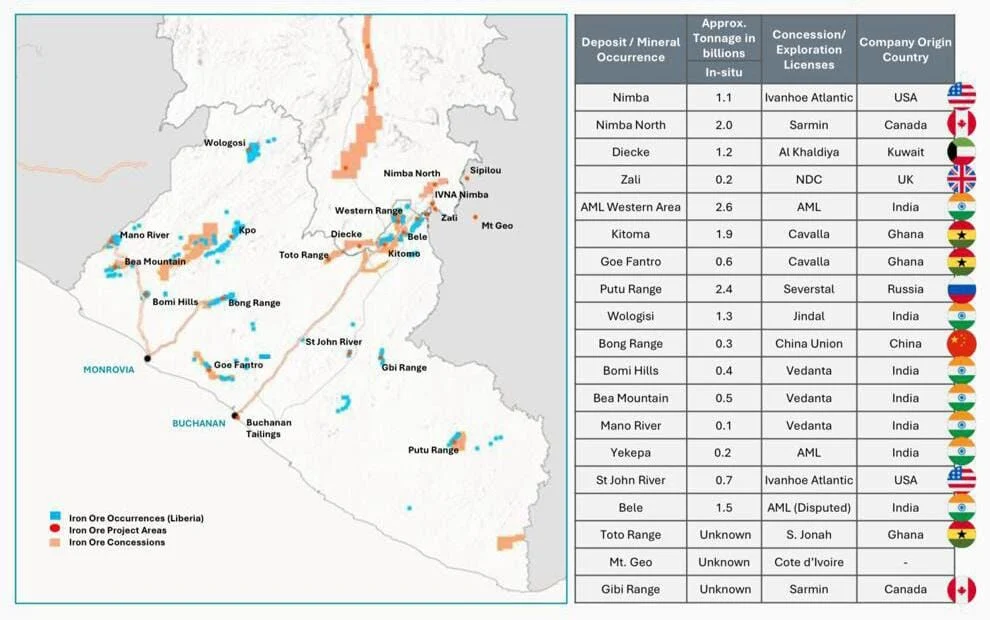
MONROVIA — A new analysis reveals that Liberia has forfeited substantial state revenue by allowing ArcelorMittal Liberia (AML) to retain exclusive control of the country’s iron-ore railway and port infrastructure. According to the report, AML’s monopoly over the Yekepa–Buchanan rail line and Buchanan port terminal has blocked third-party access and limited competition, ultimately reducing potential earnings for the government.
Under the current arrangement, AML holds sole rights to the key rail corridor and port facilities. Because no independent operator can compete or access the infrastructure, other mining companies and exporters are shut out of producing and shipping iron-ore — which the report says has implications far beyond immediate royalties. It argues Liberia has missed out on broader economic benefits including increased employment, supplier networks, and infrastructure servicing.
Furthermore, the terms of AML’s agreement with the government are cited as skewed in favour of the company. The royalty rate on iron-ore is reportedly set at 4.5 % of the sales price as defined by AML’s internal benchmark. The stability provisions for tax, import duties and exempted periods are also thought to lower government receipts when compared with what might have been achievable under more competitive arrangements. Oversight is another critical concern: government institutions reportedly lack independent verification of export pricing and resource valuations, meaning AML retains strong influence over how much ore is considered “exportable” and at what price.
The broader picture, the report contends, is one of opportunity cost: by excluding other mines and shippers from using rail and port infrastructure, Liberia is losing not only royalty and tax income from those actors, but also the indirect economic stimulus that comes with diversified mining, equipment investment and regional export trade. The article warns that unless reforms are introduced — including converting the rail and port to a multi-user system and strengthening the regulator’s independence — the country risks locking in another generation of low-yield infrastructure deals.
For the full details, see the original article at the Liberian Observer: “How Much Revenue Liberia Has Lost Under AML’s Monopoly”.
